
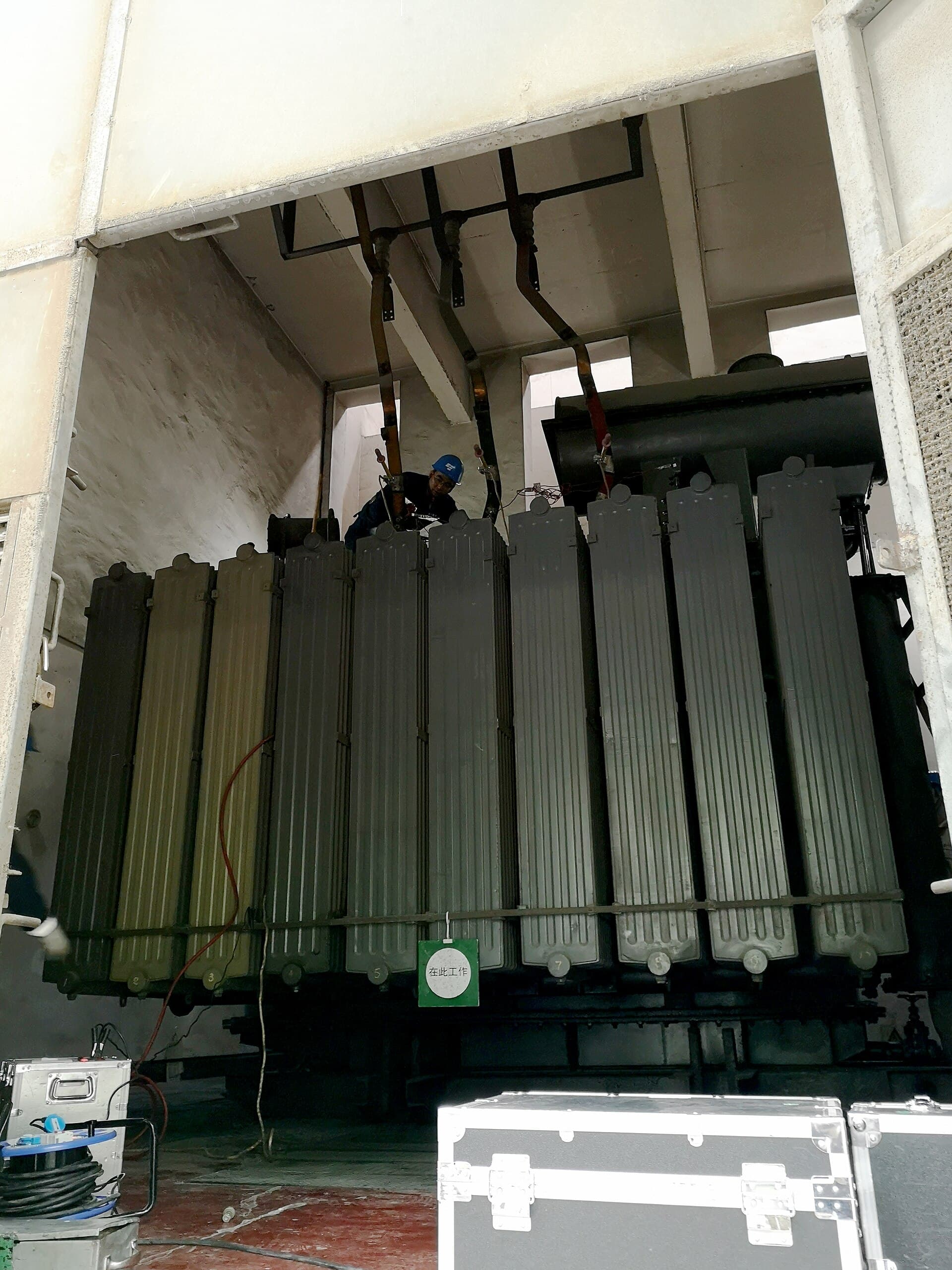
Tests turn hidden equipment conditions into measured evidence. Select them for the symptom and transformer type; applying every test to every unit without a technical reason is not good practice.
This guide is general information. HV/MV intervention and testing must be carried out by qualified personnel under the equipment manual and facility safety procedures.
The main electrical test families
TTR assesses winding ratio and tap behavior; winding resistance examines connections and contacts; insulation resistance reviews the insulation system. Tan delta and capacitance support deeper dielectric assessment. Oil-filled units have additional oil tests.
- TTR: ratio and vector group
- Winding resistance: phase and tap comparison
- Insulation resistance: insulation trends
- Tan delta: dielectric losses
- Oil tests: electrical and chemical oil condition
How results are interpreted
Compare with nameplate values, manufacturer tolerances, temperature, test connections and historical records. Check the method first if a value is suspicious and use complementary tests where justified. No single threshold applies to every model.
Why reporting matters
The instrument, temperature, phase and tap position matter alongside the reading. A complete report provides a baseline for later comparison and makes maintenance decisions auditable.
Read tests as a decision matrix
TTR examines ratio and tap behavior; winding resistance addresses conductor and contact continuity; insulation resistance tracks general insulation condition. Tan delta and capacitance provide deeper dielectric evidence, while oil testing applies only to oil-filled units. A normal result in one test does not rule out every other fault. The report needs connection method, temperature, phase, tap position and instrument identity. Questionable results are first checked for test-method or lead errors.
Decision checklist
- Question the test must answer
- Asset type and suitable method
- Phase, tap and temperature
- Comparison with nameplate and earlier data
Related service
Request technical support →Frequently asked questions
Is a TTR test enough on its own?
No. It investigates particular faults and must be interpreted with other findings.
Are all these tests performed on energized equipment?
No. Many require the equipment to be safely de-energized.
Does TTR alone prove a transformer is healthy?
No. It addresses specific ratio-related faults; other insulation or contact problems need other evidence.